
This custom desktop speaker enclosure is designed for small audio devices that need a protected front sound outlet, stable internal driver support, and a body shape that can sit securely on a table or shelf. The housing must hold the speaker driver, internal acoustic space, PCB or amplifier board, wiring path, and top control feature while keeping the front grille open enough for sound to pass through.
The front panel can be planned around a perforated grille, protective mesh area, driver position, and rounded edge structure. The enclosure body can also include internal ribs, screw bosses, board supports, cable or charging access, and controlled wall thickness so the speaker components remain aligned during assembly and everyday use.
For a custom speaker enclosure project, the same design direction can be adjusted through body size, grille pattern, driver clearance, acoustic chamber volume, control-button position, internal PCB layout, rear cover, surface texture, and assembly method. For indoor desktop use, the enclosure should also consider vibration control, airflow around electronics, dust buildup at the grille, cleaning access, and stable contact with the table surface.
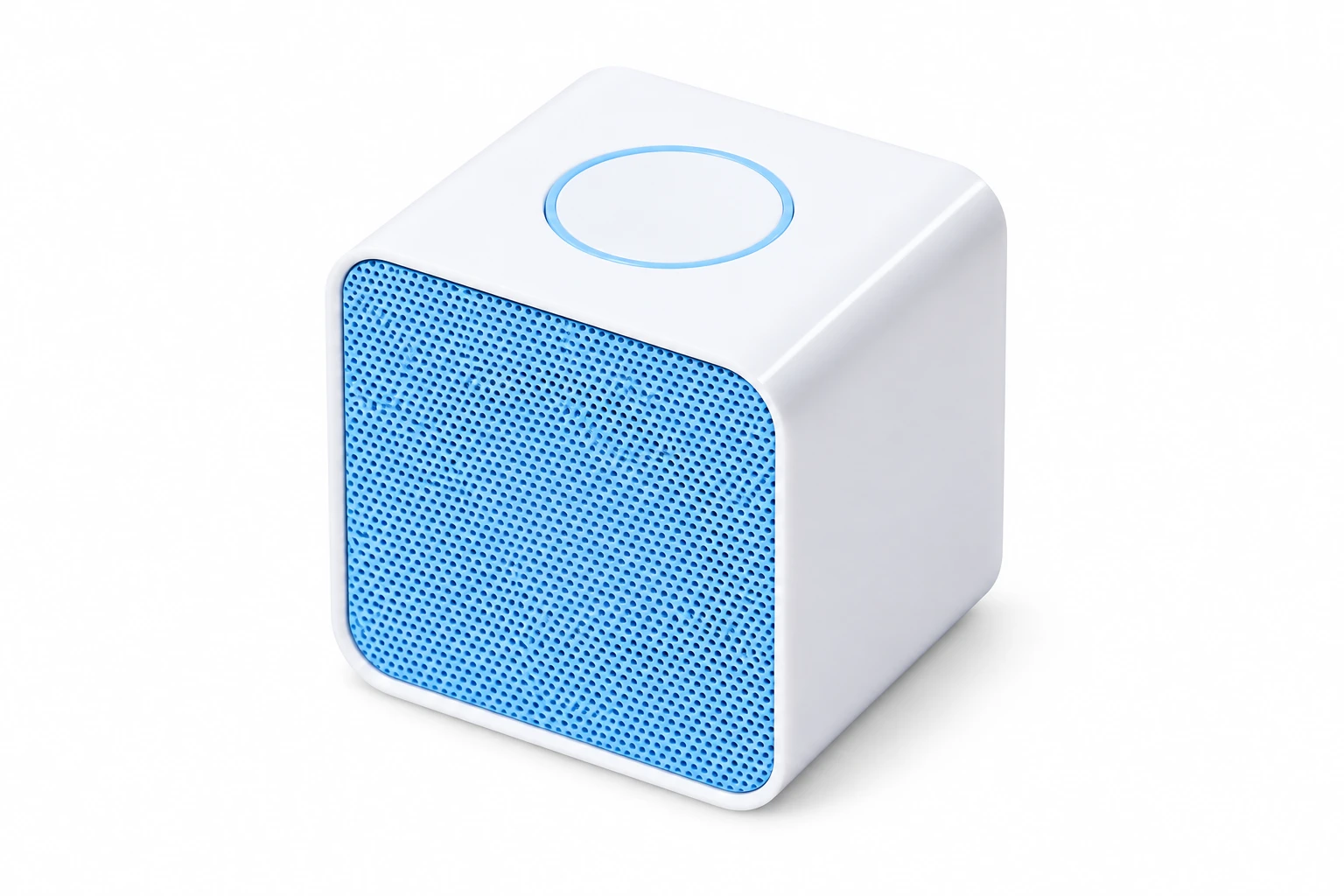
Application Fit
This type of enclosure is used for desktop speakers, portable audio devices, small powered speakers, notification sound modules, smart-home audio units, and compact speaker products. It is especially useful when the product needs a clear sound outlet, a protected driver area, a simple control surface, and an outer body that can support daily placement near desks, shelves, counters, or bedside tables.
Customization Points
- Material: molded plastic housing, metal grille, internal acoustic frame, or mixed body construction depending on strength and sound-path needs.
- Front Grille: perforation pattern, mesh insert, grille color, driver opening, and protective front bezel.
- Acoustic Space: internal chamber volume, driver clearance, vibration control, sealing surfaces, and rear-cover structure.
- Control Area: top button opening, circular control detail, indicator window, touch area, or switch access.
- Internal Layout: PCB support, amplifier board space, wiring path, screw bosses, ribs, and component clearance.
- Surface Details: color, texture, edge radius, label area, table-contact feet, and service access.