
For handheld lint remover devices, the enclosure has to provide a protected shaving head, stable motor support, and a collection chamber for removed fibers. The housing must hold the perforated shaving foil, internal blade assembly, motor, PCB, battery area, and lint container while keeping the front head safe for contact with fabric.
The upper body has to accommodate the metal shaving foil, blade clearance, motor mount, airflow path, and screw or snap-fit assembly points. The lower section can include a translucent lint collection chamber, removable cover, button opening, internal ribs, and battery or charging area so the device remains easy to hold, empty, and clean after use.
The enclosure can be tailored through head diameter, foil opening pattern, blade clearance, motor position, lint chamber volume, button placement, charging access, surface texture, and assembly method. For household fabric care use, the enclosure should also consider finger protection, fabric contact edges, vibration from the motor, lint buildup, cleaning access, and comfortable hand contact.
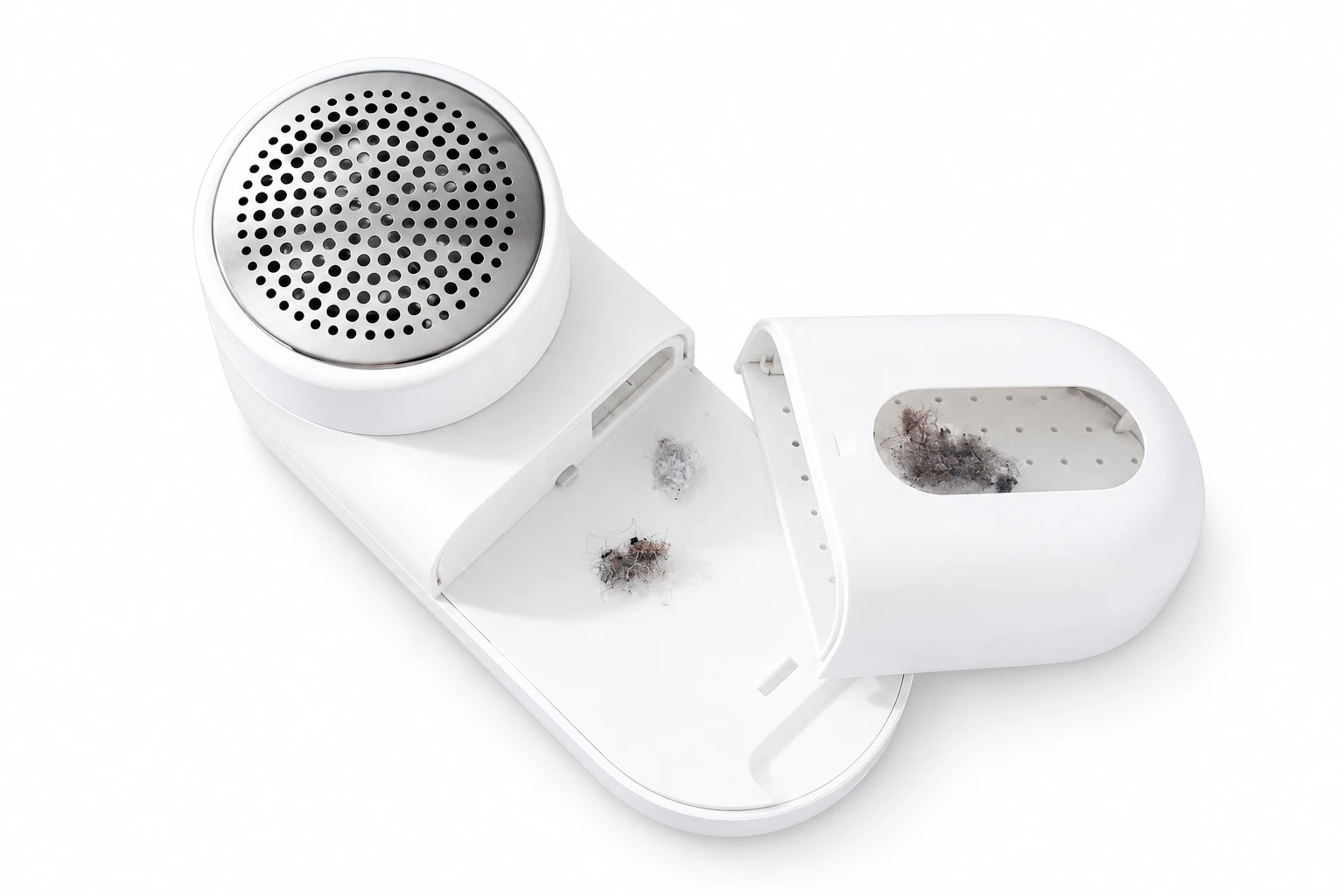
Application Fit
Typical applications include fabric shavers, lint removers, sweater shavers, garment care tools, rechargeable fabric care devices, and small handheld cleaning appliances. It suits products that need a safe perforated shaving surface, enclosed rotating parts, a visible lint container, and a body shape that can support repeated movement across clothing or upholstery.
Customization Points
- Material: molded plastic body, metal shaving foil, translucent lint chamber, or mixed front-and-back construction.
- Shaving Head: perforated foil pattern, blade clearance, head diameter, front ring, and removable head cover.
- Motor Area: motor mount, vibration control, airflow path, internal ribs, screw bosses, and blade alignment.
- Lint Chamber: collection volume, transparent window, removable cover, sealing edge, and cleaning access.
- Control And Power: button opening, indicator window, charging port access, battery cavity, PCB support, and wiring path.
- Surface Details: grip texture, color, edge radius, label area, fabric-contact edge treatment, and assembly seams.