
A wireless PCB can perform well during development but exhibit weaker Bluetooth or Wi-Fi communication after being installed inside its final metal enclosure.
The electronics may remain unchanged. The radio module, firmware, antenna, and power supply can all be identical to those used during earlier testing.
What has changed is the electromagnetic environment surrounding the antenna.
For Original Equipment Manufacturers (OEMs), this becomes a costly problem when the enclosure has already been designed, prototyped, or approved for production.
A metal housing may be required for mechanical protection, appearance, thermal management, or electromagnetic shielding. Replacing it with plastic may not be acceptable.
Academic research shows that metal and reliable wireless communication are not inherently incompatible.
The work is in understanding how the metal structure interacts with the antenna, and how those interactions can be evaluated before the enclosure is released for manufacturing.
What Happens to an Antenna When Metal Is Nearby?
Bluetooth Low Energy operates in the 2.4 GHz frequency band. Wi-Fi products may use 2.4 GHz, 5 GHz, or 6 GHz bands, depending on the radio technology and regional requirements.
At these frequencies, nearby conductive surfaces can change the electromagnetic behavior of an antenna.
A metal enclosure can reflect or restrict radiation, alter current distribution, and affect the impedance presented to the radio.
Two effects deserve particular attention.
Shielding occurs when the conductive housing reduces the electromagnetic energy that can propagate between the internal antenna and the surrounding environment.
Detuning occurs when nearby objects change the antenna's electrical behavior, potentially shifting its resonant frequency or degrading its impedance match.
These effects can occur together, but they are not identical.
A metal enclosure containing gaps or openings may permit some radiation to escape while still altering the antenna's performance.
Likewise, an antenna positioned close to a metal panel may experience changes in impedance and radiation efficiency even when it is not completely surrounded by metal.
The consequences depend on the antenna design, metal geometry, frequency, electrical connections, and the relative positions of internal components.
Research measurements give a clearer picture of these effects than any universal rule about how far an antenna should be kept from metal.
Experimental Evidence: Changing the Metal-Rim Design Increased Measured Bandwidth from 60 to 520 MHz
A study published in the ETRI Journal in 2018 provides a particularly useful comparison.
In Ground Radiation Antenna for Mobile Devices Using Controlled Endless Metal Rim Mode, the research team investigated a compact antenna surrounded by a metal rim.
The experimental structure used a 30 × 20 mm PCB ground plane and a surrounding metal rim measuring 34 × 24 mm, separated from the ground plane by a 2 mm gap.
The researchers compared two antenna configurations.
The reference antenna did not include a capacitor specifically intended to control the metal rim's resonant mode.
The modified antenna introduced a capacitor between the metal rim and the PCB ground plane, allowing the metal structure to participate more effectively in radiation.
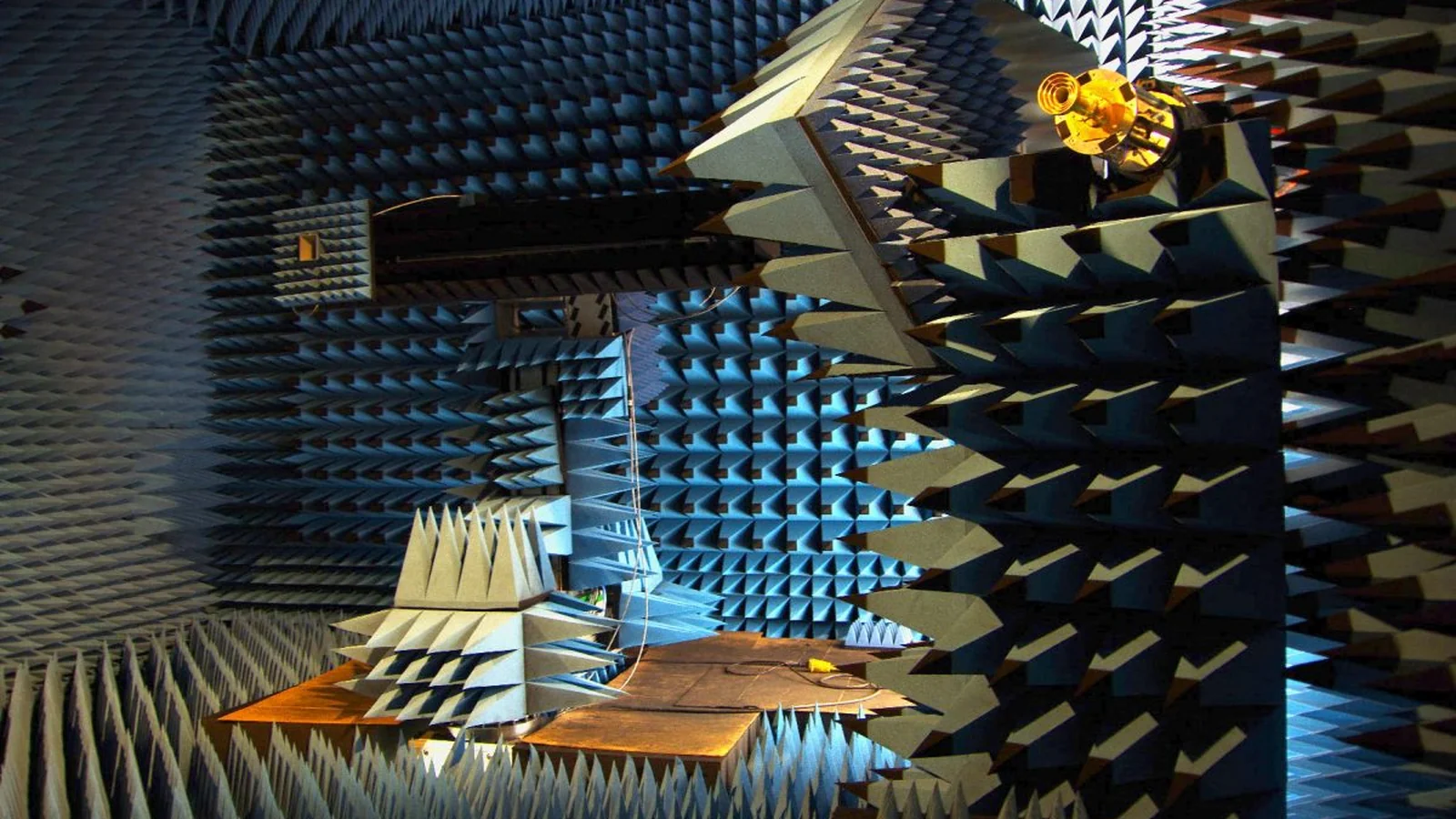
Both designs were fabricated and evaluated using a network analyzer and an over-the-air measurement chamber.
The experimental results were substantial.
| Measured characteristic | Reference antenna | Modified metal-rim antenna |
|---|---|---|
| Impedance bandwidth at −6 dB | 60 MHz | 520 MHz |
| Measured bandwidth range | 2.40–2.46 GHz | 2.28–2.70 GHz |
| Average realized efficiency | 34% | 56% |
| Frequency range used for efficiency average | 2.4–2.5 GHz | 2.3–2.7 GHz |
The reported efficiency averages were calculated over different frequency intervals, so the 34% and 56% values should not be treated as a controlled comparison at one identical frequency.
The measured bandwidths, however, demonstrate a clear improvement in the proposed antenna configuration.
The research shows that metal does not necessarily have to be eliminated from the antenna environment. With a properly designed electrical connection and resonant structure, the metal rim can contribute to radiation instead of remaining an uncontrolled influence.
This is not a recommendation for enclosure manufacturers to add a capacitor to arbitrary metal housings.
The result depends on a specific RF architecture, PCB geometry, and carefully controlled metal structure.
For OEMs, the broader implication is that the relationship between the antenna, PCB ground plane, and metal enclosure can be part of the wireless design itself.
Changing the enclosure geometry after antenna validation may therefore affect more than mechanical fit.
Experimental Evidence: A Metal-Cased Bluetooth Device Measured 68% and 27% Efficiency in Different Environments
A second study shows why the final operating environment matters.
In 2020, researchers published Bluetooth Antenna for Metal-Cased Smart Jewellery in Electronics Letters.
The team developed a Bluetooth antenna for a compact wearable device containing metallic covers.
The prototype operated in the 2.40–2.48 GHz Bluetooth frequency range.
To evaluate realistic use conditions, the researchers measured the antenna in free space and against a tissue-equivalent model representing the electromagnetic properties of the human body.
The results showed a considerable difference.
| Test condition | Measured total antenna efficiency |
|---|---|
| Metal-cased prototype in free space | 68% |
| Same prototype against a human-tissue-equivalent model | 27% |
The paper also reported changes in the antenna's impedance characteristics.
When placed against the tissue-equivalent model, the antenna resonance shifted toward approximately 2.35 GHz.
These results show how the surrounding environment can affect a compact wireless device even after its metal-cased antenna has been deliberately engineered.
There is a limitation in reading this experiment, though.
The 68% and 27% results do not measure the performance difference between a plastic enclosure and a metal enclosure. Both conditions used the metal-cased antenna design. The changed variable was the presence of the tissue-equivalent model.
The experiment therefore supports a narrower conclusion: once an antenna is integrated into a product, nearby materials and the intended use environment can substantially alter measured performance.
For an OEM developing a wearable device, portable controller, or wireless product used near other materials, testing the antenna only on an exposed PCB may not represent its final operating conditions.
Can a Full Metal Housing Still Support Wi-Fi?
Yes, provided the antenna system is designed for that environment.
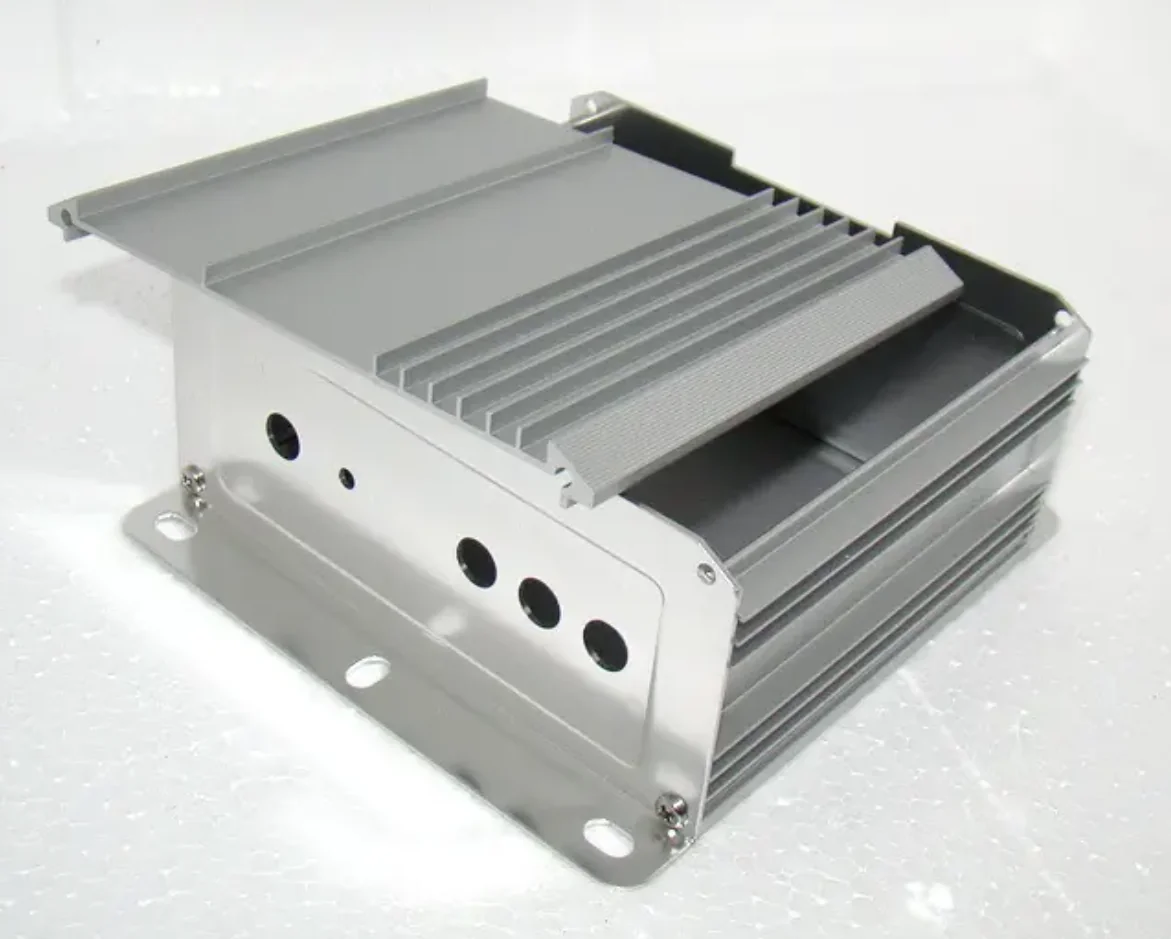
A paper published in Progress In Electromagnetics Research C in 2016, A Compact GPS/WLAN Antenna Design for Mobile Terminal with Full Metal Housing, investigated a compact antenna intended for a device with a full metal housing.
The proposed antenna occupied approximately 20.5 × 5 × 4 mm and was designed to cover GPS and multiple WLAN frequency bands.
The researchers reported the following measured average efficiencies:
| Operating band | Measured average efficiency |
|---|---|
| GPS, 1.575 GHz | 40% |
| WLAN, 2.45 GHz | 41% |
| WLAN, 5.2/5.8 GHz | 70% |
The figures describe the performance of this particular engineered antenna under the study's measurement conditions.
They do not establish that all metal-enclosed products can achieve the same results.
They do show that a wireless device does not always need an entirely plastic enclosure to support Wi-Fi. The metal structure and the antenna can be designed as an integrated electromagnetic system.
Another study, Bandwidth Enhancement Using a Slot-Inverted F Hybrid Antenna for Metal Frame Devices, published in Microwave and Optical Technology Letters in 2020, investigated a different approach.
The researchers combined a slot antenna with an inverted-F antenna to address the bandwidth limitations of compact antennas surrounded by metal.
The fabricated prototype achieved a measured impedance bandwidth of 450 MHz, covering 2.3–2.75 GHz at an S11 threshold of −10 dB.
Its measured efficiency exceeded 75% across the reported frequency range.
Together, these studies show that metal-enclosed wireless products can achieve practical antenna performance through specialized RF design.
The results should not be read as proof that adding a random opening or slot to an enclosure will produce the same effect.
The geometry, feeding structure, matching network, and surrounding conductive surfaces must be considered together.
Why Antenna Position and Orientation Can Change the Result
Antenna placement can matter as much as the enclosure material.
A study published in Sensors in 2022, Towards a Recommender System for In-Vehicle Antenna Placement in Harsh Propagation Environments, investigated Bluetooth Low Energy communication in a metallic test environment designed to reproduce selected characteristics of a vehicle engine compartment.
The researchers used an experimental structure containing metal surfaces and movable metallic obstacles.
Two wireless nodes were positioned approximately 1.25 m apart, and multiple commercial antennas were evaluated under different positions and orientations.
The investigation combined received signal strength indicator (RSSI) measurements with vector network analyzer measurements and electromagnetic simulations.
The results were not uniform across the antennas.
In positions where metal affected the antenna's near field, some antennas exhibited substantial degradation, while others maintained suitable communication characteristics.
Rotating an antenna by 90 degrees also changed its behavior across BLE channels.
In some conditions, introducing a metal obstacle worsened communication. In others, specific antenna and obstacle arrangements produced comparatively favorable results because of their radiation patterns.
The researchers emphasized that RSSI alone could not reliably diagnose all antenna problems.
For enclosure development, that challenges two common assumptions.
First, an antenna that works well in one orientation will not necessarily perform equally well after the PCB is rotated inside a different housing.
Second, moving an antenna farther from metal does not automatically guarantee an optimal system design.
Metal surfaces can affect impedance, radiation patterns, and propagation paths in different ways.
The appropriate position has to be evaluated using the selected antenna and the actual product geometry.
Three Engineering Approaches for Metal-Enclosed Wireless Products
The published research suggests several possible design approaches, depending on the product and its RF requirements.
Position the Antenna Outside the Main Metal Housing
An external antenna can reduce the extent to which the main enclosure surrounds the radiating structure.
This may suit fixed industrial gateways, monitoring devices, and other products where an external antenna is mechanically acceptable.
It requires suitable RF connections, cable routing, mechanical mounting, and environmental sealing, though.
A feed cable or connector can introduce losses and impedance discontinuities if the RF system is not designed appropriately.
The antenna also needs to remain compatible with the wireless hardware and its applicable certification conditions.
Use a Nonconductive Antenna Region
A plastic antenna window or nonmetallic section can provide a region through which electromagnetic energy can propagate without the same shielding behavior as a continuous metal wall.
This allows the rest of the enclosure to remain metallic.
The window's dimensions, material properties, surface finish, and proximity to the antenna can all influence its effectiveness, though.
Not every polymer formulation behaves identically at RF frequencies.
Certain fillers or conductive coatings can change electromagnetic properties.
A nonconductive window may also introduce additional mechanical interfaces, fasteners, or seals that need to be considered during enclosure manufacturing.
The final assembly must satisfy both its wireless requirements and any relevant environmental protection requirements.
Design the Metal Structure as Part of the Antenna
For compact products, the enclosure itself may be engineered to contribute to antenna radiation.
The 2018 ETRI Journal study demonstrated this approach using a controlled metal-rim mode.
The 2016 full-metal-housing study demonstrated multiband wireless operation within a metal-enclosed structure.
These designs require RF engineering rather than ordinary mechanical modification.
Dimensions, slots, electrical connections, matching components, and metal geometry may become functional elements of the antenna system.
As a result, changes to enclosure geometry or assembly details can affect the validity of the previously evaluated RF design.
What Should OEMs Measure Before Approving the Enclosure?
The research shows why a wireless product should be assessed in its assembled configuration rather than relying on module datasheets or open-board measurements alone.
A meaningful evaluation may include the following measurements, selected according to the product's requirements.
Antenna impedance and resonance. A vector network analyzer can be used to measure reflection characteristics such as S11. Comparing results before and after installing the PCB in the enclosure may help identify impedance changes or resonance shifts.
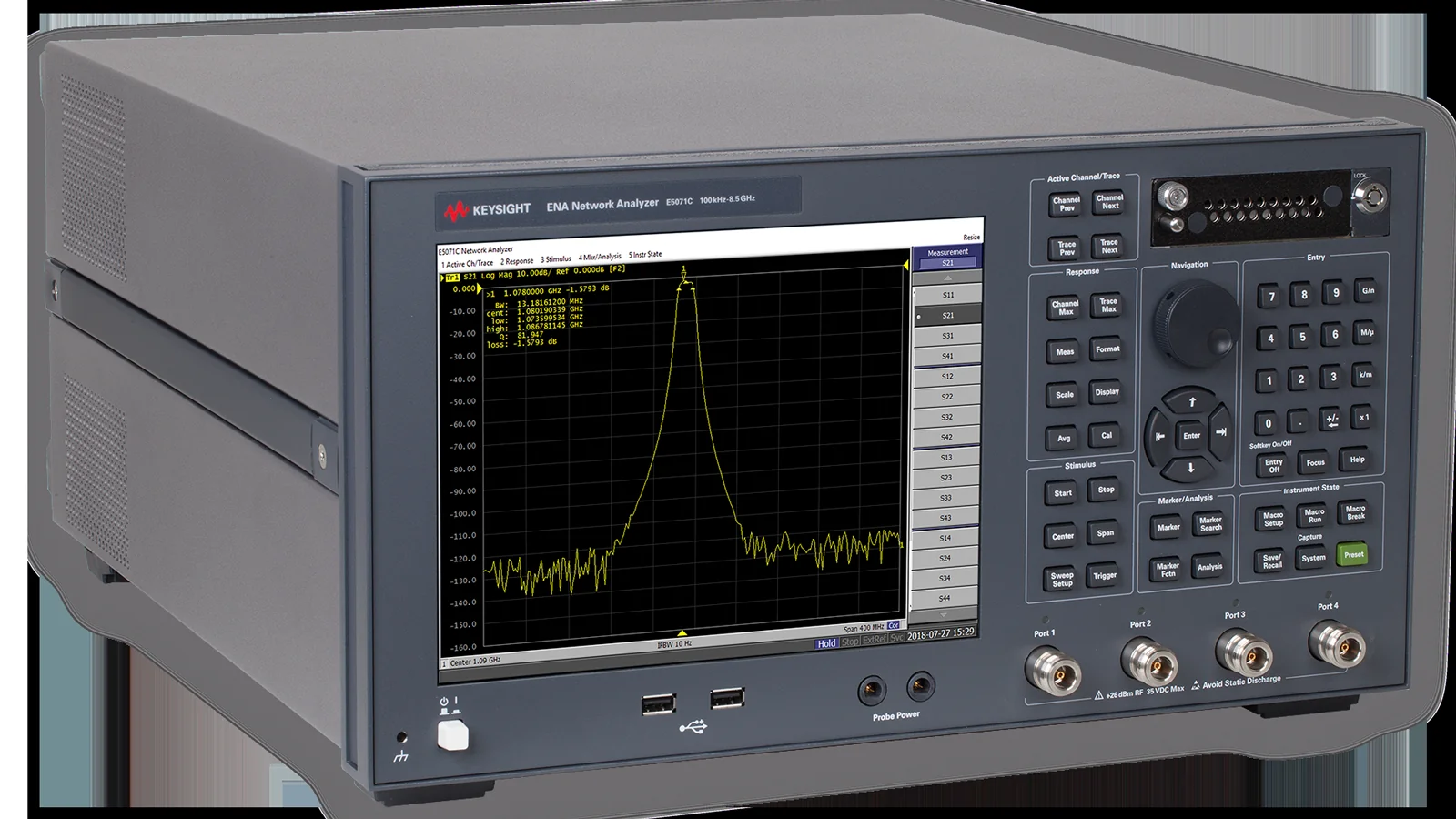
Good S11 performance does not automatically demonstrate high radiation efficiency or reliable communication, though.
Radiation efficiency and radiation pattern. Over-the-air measurements can evaluate how effectively the antenna radiates and how that radiation varies with direction.
The academic studies examined above used such measurements to evaluate antennas designed around metal structures.
Actual wireless link behavior. Bluetooth RSSI, packet success, connection stability, and Wi-Fi throughput may provide evidence of system-level performance under defined conditions.
These measurements should be conducted using appropriate distances, orientations, operating channels, and environmental conditions.
A reliable connection during one short test does not establish performance under every intended operating condition.
Mechanical and environmental requirements. If the enclosure uses an antenna window, external connector, or modified opening, the resulting housing may also require evaluation of its mechanical integrity and sealing.
IEC 60529 provides the framework for classifying enclosure protection against ingress of solid objects and water. It does not specify Bluetooth or Wi-Fi performance requirements.
An enclosure modification intended to improve wireless operation should not be assumed to preserve an earlier ingress-protection rating without appropriate assessment.
These verification activities answer different questions and should not be treated as interchangeable.
For example, an antenna can have an acceptable impedance match while its radiation pattern directs insufficient energy toward the intended receiver.
Similarly, a product can achieve acceptable short-range Bluetooth communication while still requiring investigation of performance near metal equipment, machinery, or other structures in its intended environment.
Why Mechanical Design Decisions Should Not Be Finalized Before RF Requirements
For an OEM, the most expensive wireless enclosure problem may not be the antenna itself.
It may be discovering the integration problem after the mechanical design is no longer easy to change.
A PCB may already have fixed mounting positions, connectors, and antenna placement. The enclosure may have reached the tooling or production stage.
At that point, changing the antenna location could require redesigning the PCB mounting arrangement or introducing a new opening.
A metal-integrated antenna design may require even closer control of the enclosure geometry, because mechanical features also influence the RF behavior.
The published experiments show why these decisions should be coordinated earlier.
The 2018 metal-rim study found large differences in measured bandwidth between two configurations of a compact metal-surrounded antenna.
The 2020 Bluetooth jewellery study found substantial efficiency differences between free-space and body-adjacent test conditions.
The 2016 and 2020 WLAN antenna studies found that specially engineered structures can maintain useful wireless performance in metal-enclosed devices.
These findings do not support a universal enclosure design rule.
They support an engineering process in which the selected antenna, enclosure geometry, materials, and intended operating conditions are considered together.
Before finalizing the housing, the product team should establish the intended radio technology, operating bands, antenna integration requirements, relevant mechanical constraints, and the verification criteria for the finished product.
The enclosure manufacturer can then evaluate the structural and manufacturing implications of those requirements, while the RF design team remains responsible for determining whether the antenna system will meet its technical performance targets.
Metal Housing Design and Wireless Performance Must Be Developed Together
A metal enclosure can weaken Bluetooth and Wi-Fi communication through shielding, antenna detuning, and changes to the surrounding electromagnetic environment.
But the magnitude and even the direction of some performance changes depend on the particular antenna and housing configuration.
Experimental research shows both sides of this relationship.
Metal structures can severely complicate wireless antenna integration, yet deliberately designed metal-frame and metal-housing antennas can achieve substantial efficiency and bandwidth.
For OEMs, the practical question is whether the proposed housing is compatible with the chosen wireless architecture and the intended operating conditions, not whether metal should be avoided altogether.
An external antenna, nonconductive RF window, or engineered metal-integrated antenna may each be appropriate in different designs.
The decision should be supported by the relevant antenna specifications, mechanical integration requirements, and measurements on the assembled product.
Tongyong Industries supports custom electronic enclosure development through structural design review, material selection, PCB integration, prototyping, manufacturing, and surface finishing.
Through its enclosure design and engineering services, OEM customers can submit available CAD drawings, STEP files, PCB information, antenna placement requirements, and product specifications for an initial mechanical design and manufacturing review.
Identifying potential conflicts between enclosure geometry and RF requirements before production helps reduce the risk of late structural changes while preserving the intended mechanical functions of the housing.