
A conical enclosure can make a product look less like a standard box, but its value depends on more than shape. The housing still has to stand securely, hold internal parts, provide access to buttons and connectors, manage air movement, and suit the selected manufacturing process.
For a custom enclosure project, the conical form should be reviewed as an engineering decision. Stability, internal volume, parting lines, screw locations, vents, cable exits, and surface finish all need to be planned before the shape moves too far into tooling or production.
Why conical housings are used in product design
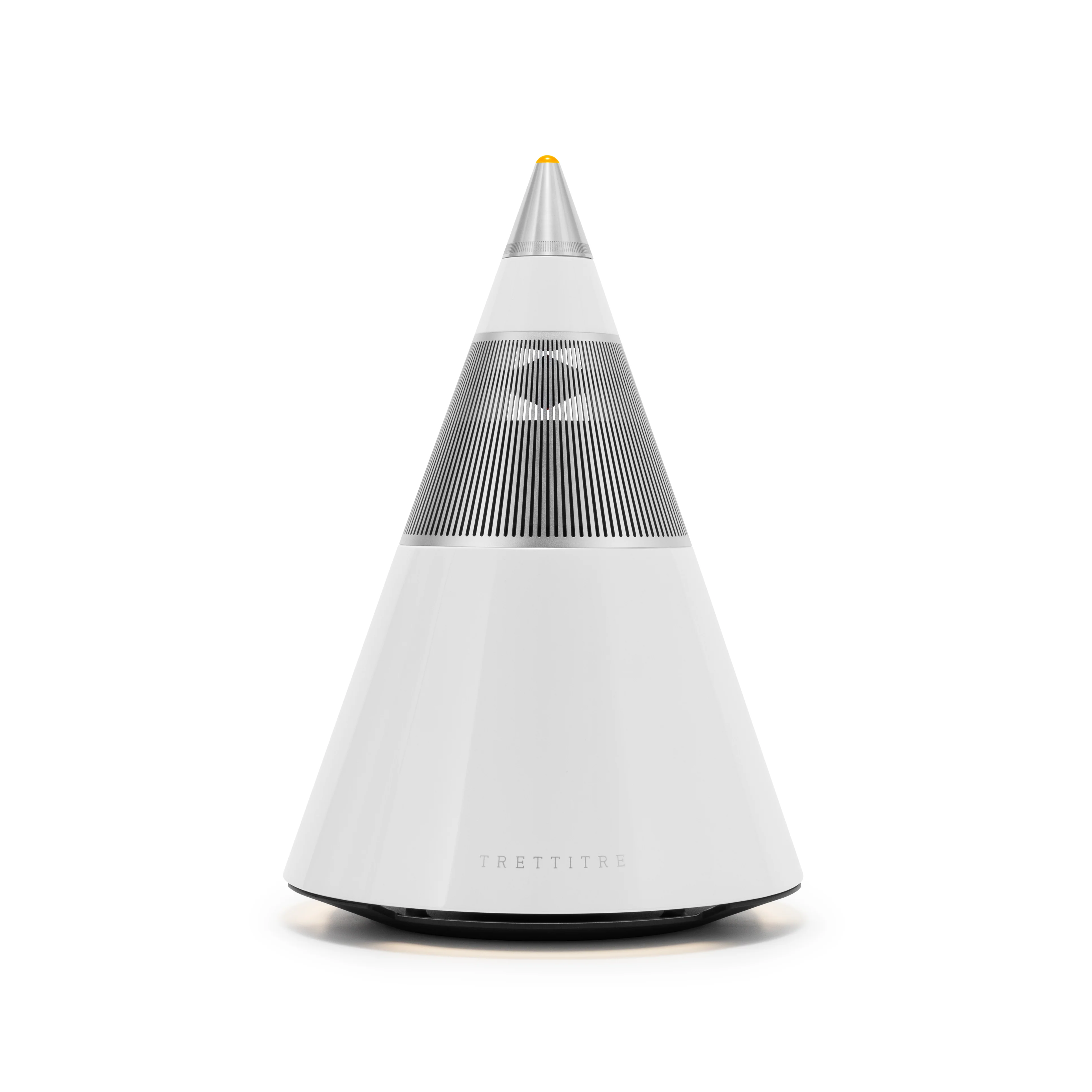
A cone or truncated cone naturally creates a wider base and a narrower upper area. This can help the product sit more firmly while reducing the visual weight of the upper body. The shape is often considered for speakers, air-treatment devices, humidifiers, tabletop controls, and devices where the output area or control surface needs to be easy to notice.
The engineering challenge is that most internal components are not conical. Circuit boards, batteries, fans, speakers, sensors, and connectors often require flat mounting points or controlled clearances. A conical shell may therefore need internal brackets, ribs, posts, or carrier frames so the outside shape does not fight the inside layout.
Stability comes before appearance
A wider base can improve stability, but it does not guarantee it. The designer still needs to check overall height, base diameter, internal weight distribution, rubber feet, cable pull direction, and the position of heavy components such as batteries, transformers, motors, or metal supports.
For tabletop products, a hidden weighted base, an internal frame, or a wider foot ring may be needed. These features should be considered early because they affect the lower housing, assembly order, and available space for electronics or airflow.
The internal layout should not simply follow the outer curve
The usable section inside a conical housing changes from bottom to top. The lower area often works better for power modules, batteries, larger PCBs, or ballast parts. The upper area may be better for buttons, indicator windows, speaker openings, air outlets, knobs, or sensor windows.
Plastic housings can use bosses, ribs, clips, guide slots, and stepped supports to hold parts in position. Aluminum, sheet-metal, or CNC-machined versions require different checks, including internal machining access, wall thickness, end-cap attachment, surface finishing, and assembly sequence.
Openings and vents should be driven by function
Common openings on a conical enclosure include speaker holes, inlet and outlet vents, USB or DC ports, buttons, indicator windows, and service covers. These features should be placed around the actual internal components, not only around the best-looking side of the housing.
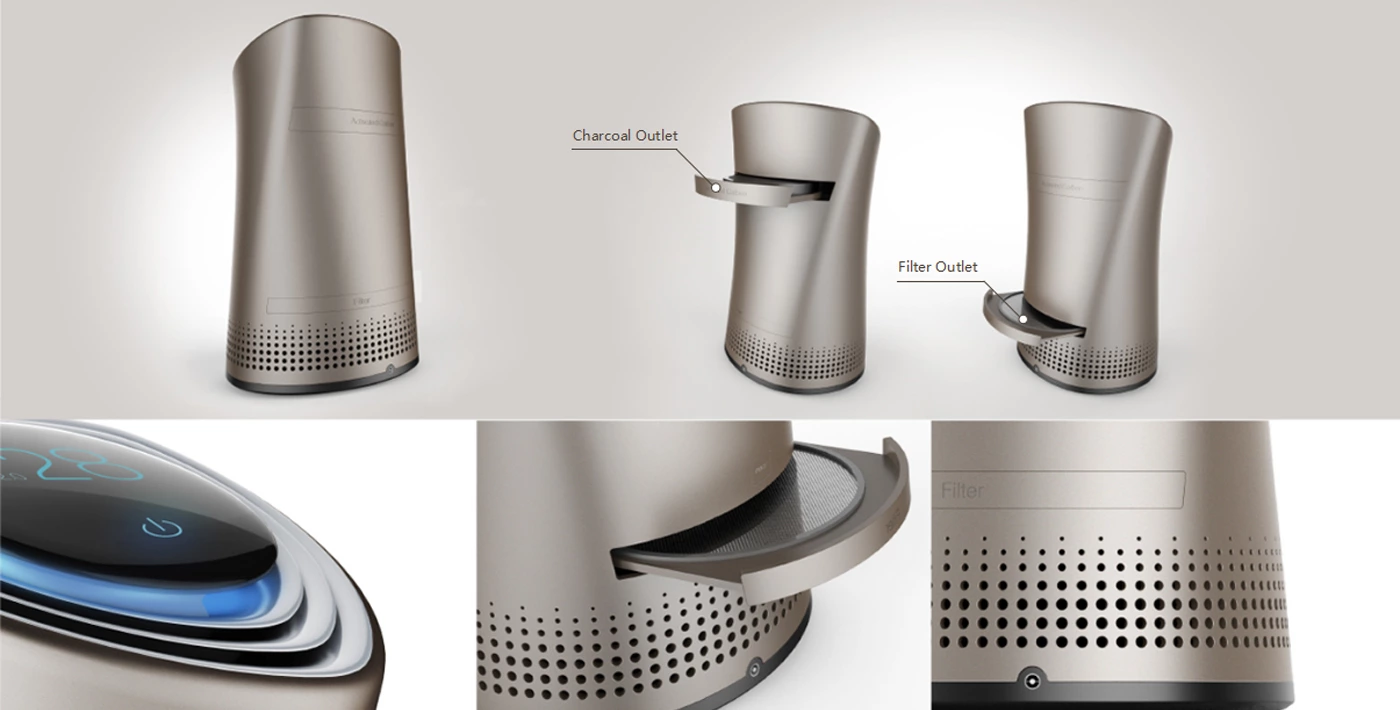
For air-treatment devices, the shell can support circular or vertical airflow, but vent area, filter access, pressure drop, cleaning, and water or dust entry must be considered together. For audio products, the housing may affect cavity volume, grille placement, vibration, and acoustic behavior.
Material choice changes both structure and finish
Plastic is often practical for molded production because clips, ribs, bosses, and textured surfaces can be integrated into the part. Aluminum may be selected for higher stiffness, heat transfer, or a metal finish. Sheet metal and CNC machining can be useful for prototypes, low-volume builds, or projects with a high level of customization.
The surface finish should be chosen with the manufacturing route in mind. Painting, anodized-style finishes, matte textures, gloss finishes, silk-screen markings, laser marking, and local texture changes all need to work with the material, part geometry, expected handling, and production quantity.
When a conical enclosure is not the best choice
A conical housing can create unnecessary difficulty when the device needs many straight-line ports, several connectors in a row, DIN-rail mounting, rack installation, stacking, or a large flat display. In those cases, a rectangular enclosure or sloped control box may be easier to manufacture, wire, assemble, and service.
If the internal board layout is already fixed, the connector positions cannot move, or the product must mount flat against a wall, the conical form may add cost without improving the product. The enclosure shape should follow the real use case, not only the desire for a distinctive outline.
Design checks before prototyping
Before prototyping a conical product enclosure, review base stability, internal mounting points, connector access, vent or acoustic performance, assembly sequence, and material finish. These checks help prevent late changes to the outer shape, mold design, CNC process, or internal support structure.
A successful conical enclosure gives the product a recognizable form while still behaving like a practical housing: stable, buildable, serviceable, and compatible with the components inside.