
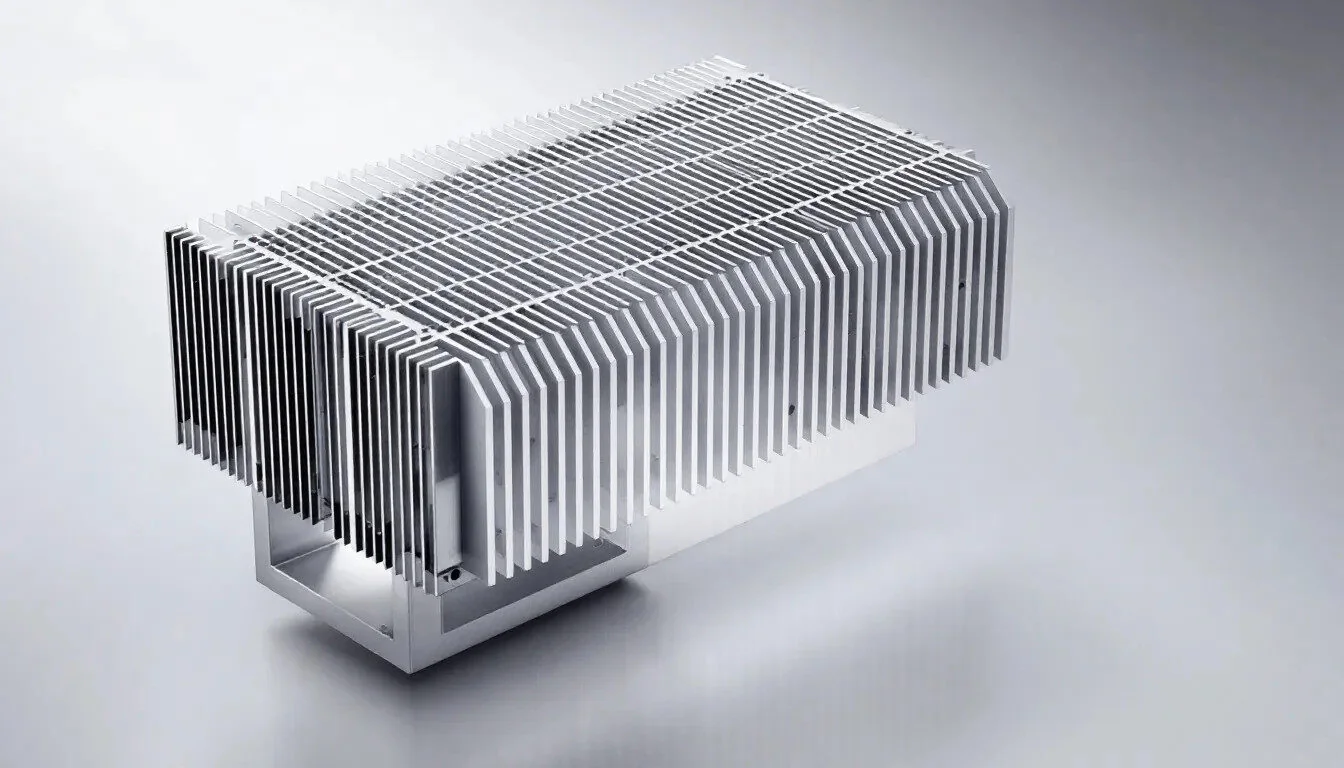
In May 2026, researchers published a study demonstrating how an electrical enclosure could achieve substantial cooling without exchanging its internal air with the surrounding environment.
The researchers developed a closed-cycle cooling system combining an internal circulation fan, a U-shaped airflow duct, and thermosiphons to transfer heat away from electrical components.
In the tested industrial electrical panel, the cooling arrangement reduced the maximum equipment temperature from 117°C to approximately 42°C.
The results, published in the peer-reviewed journal Discover Mechanical Engineering under the title A Hybrid Air-Thermosiphon Cooling System for Thermal Management of Sealed Electrical Panels, demonstrate that maintaining an environmentally sealed enclosure does not necessarily prevent effective heat removal.
Those results belong to a specific industrial enclosure and cooling configuration, though. They should not be read as a universal performance improvement for smaller electronic housings.
The underlying engineering question applies to many products.
Outdoor sensors, industrial controllers, communication devices, measurement instruments, and other electronic equipment may require protection against dust, moisture, or direct water exposure.
These requirements can make conventional ventilation openings unsuitable.
So how does an electronics enclosure release internally generated heat while remaining sealed?
How Does Heat Escape from a Sealed Enclosure?
A sealed enclosure does not prevent heat transfer. It prevents, or limits according to its construction and protection requirements, the exchange of substances between the internal and external environments.
Heat can still move through solid materials and across enclosure surfaces.
For a typical passively cooled electronic product, heat follows a sequence:
- Electronic components generate heat during operation.
- Heat reaches the internal enclosure surfaces through conduction, internal air convection, and radiation.
- Heat passes through the enclosure walls.
- The external surfaces release heat to the surrounding environment through convection and thermal radiation.
What matters is the thermal resistance of this entire path.
An effective heatsink attached to a processor may reduce the processor's temperature relative to the internal air. But if the heat cannot move efficiently from the internal structure to the enclosure walls, the heatsink alone may not prevent the internal temperature from increasing.
In its article PCB Heat in a Sealed Enclosure: What It Does and How to Size for It, NEMA4 Enclosure emphasises the need to identify the electrical power dissipated as heat and evaluate the available enclosure surface area.
The same principle applies to small custom electronic housings.
Before designing additional cooling features, engineers need to understand where the heat originates, how much is generated, and which components have the lowest allowable operating temperatures.
Using the Enclosure Itself as a Heatsink
One approach is to use the enclosure structure as part of the thermal management system.
Instead of allowing heat-producing components to transfer most of their energy into the enclosed air, a conductive connection can carry heat toward a larger external surface.
An aluminum housing, for example, can incorporate internal mounting features that connect heat-generating components to the enclosure body.
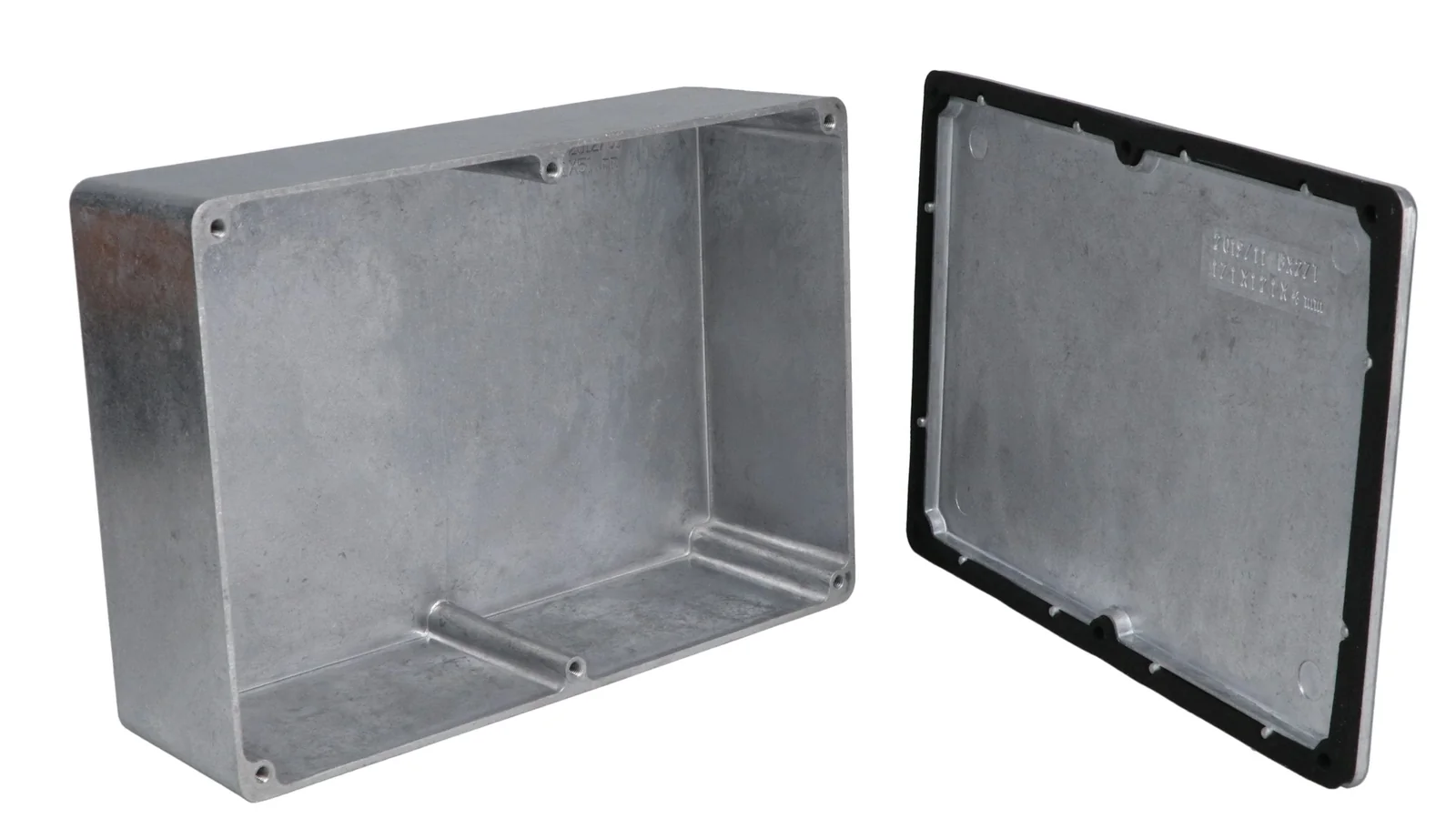
Depending on the assembly, the connection may involve a metal bracket, heat spreader, thermal interface pad, or another suitable thermal component.
This approach depends on the mechanical and thermal quality of the connection.
A large aluminum enclosure provides limited benefit if the primary heat source is separated from it by a substantial air gap or a poorly conductive mounting structure.
Industry thermal management specialist Boyd describes the use of graphite heat spreaders, thermal interface materials, vapor chambers, and conductive components in rugged electronics.
These methods can distribute concentrated heat and help transfer it toward surfaces capable of releasing it.
Directing heat into the enclosure also raises another consideration, though: the external housing temperature.
For handheld equipment or products that users regularly touch, a solution that improves processor temperature may create an unacceptable external hot spot.
Boyd's ruggedized tablet case study illustrates this tradeoff. The engineering objective was to reduce the product's skin temperature while keeping internal components within their operating limits, not simply to maximize heat transfer to the outside surface.
The correct thermal design must therefore consider both internal component temperatures and the temperatures of accessible enclosure surfaces.
Can External Cooling Fins Work Without Ventilation Holes?
External fins increase the surface area available for heat exchange.
They can be incorporated into die-cast housings, extruded aluminum profiles, or separately attached heatsinks.
Unlike ventilation holes, external fins do not necessarily create an opening into the protected electronic compartment.
Their effectiveness depends on geometry, orientation, ambient conditions, and the thermal connection between the heat source and the finned surface.
Research published in the ASME Journal of Electronic Packaging, titled Thermal Assessment of Naturally Cooled Electronic Enclosures With Rectangular Fins, investigated passive heat transfer through experimental measurements and theoretical analysis.
The researchers tested enclosures with different dimensions and heat generation rates, comparing finned structures with unfinned configurations.
One finding stands out: thermal radiation contributed approximately half of the total heat transfer in the tested enclosures.
That result is specific to the studied configurations, but it shows why evaluating cooling fins solely through airflow can underestimate other heat transfer mechanisms.
More recently, an October 2025 study, Cooling Analysis and Innovative Design to Increase Heat Transfer in Sealed Electronic Devices, used computational fluid dynamics (CFD) to investigate an externally ventilated cooling channel integrated with a sealed electronics enclosure.
The researchers compared different fin arrangements while maintaining separation between the internal electronics and the external cooling airflow.
In the optimized simulated configuration, five long fins reduced the predicted maximum processor temperature to approximately 79°C.
The study also identified a tradeoff: longer and more numerous fins improved heat transfer but increased resistance to airflow.
The numerical study did not include direct experimental validation of its proposed system, so the reported temperatures should be understood as simulation results rather than measured product performance.
For enclosure design, the lesson is that fins should be engineered for the expected airflow conditions, not simply added in the greatest possible number.
Does Surface Finishing Affect Heat Dissipation?
Surface finishing is often selected for appearance, corrosion resistance, durability, or product branding.
The external finish can also influence thermal performance, though.
A surface exchanges heat with its surroundings through radiation, and this process depends partly on thermal emissivity.
Unfinished aluminum and a coated or anodized aluminum surface may have different radiative properties.
In the peer-reviewed study Nanoporous Anodic Alumina Oxide Layer and Its Sealing for the Enhancement of Radiative Heat Dissipation of Aluminum Alloy, researchers investigated how anodized aluminum oxide structures and sealing treatments affected thermal emissivity and radiative heat transfer.
The experiments showed that particular anodizing treatments could improve radiative heat dissipation compared with untreated aluminum.
Surface treatment performance cannot be reduced to a universal statement such as "black anodizing always provides better cooling," though.
Technical guidance published by aluminum heatsink manufacturer Arma Elektronik explains that the contribution of radiation depends on surface temperature, surrounding surfaces, airflow, and geometry.
It also distinguishes external surface treatment from the characteristics of component mounting surfaces.
Coating thickness, roughness, contact pressure, and the thermal interface material can influence contact resistance.
An enclosure may therefore benefit from one surface finish externally while requiring a different treatment at critical internal contact areas.
For outdoor products, solar exposure introduces an additional complication.
A dark surface that emits thermal radiation effectively may also absorb significant solar energy.
Research published by Electronics Cooling on outdoor enclosure cooling solutions compared different external coatings, airflow arrangements, and solar exposure conditions.
In the investigated configurations, a white coating offered favorable thermal performance under solar loading because it combined relatively low solar absorptivity with high thermal emissivity.
The appropriate external finish therefore depends on whether the enclosure operates indoors, outdoors in shade, or under direct sunlight.
What About Sealed Plastic Electronics Enclosures?
Not every product can use a fully metallic enclosure.
Plastic housings are common in handheld devices, industrial sensors, consumer electronics, measurement equipment, and other applications where appearance, weight, electrical isolation, wireless communication, or manufacturing requirements influence material selection.
Conventional plastics generally conduct heat less efficiently than common enclosure metals such as aluminum.
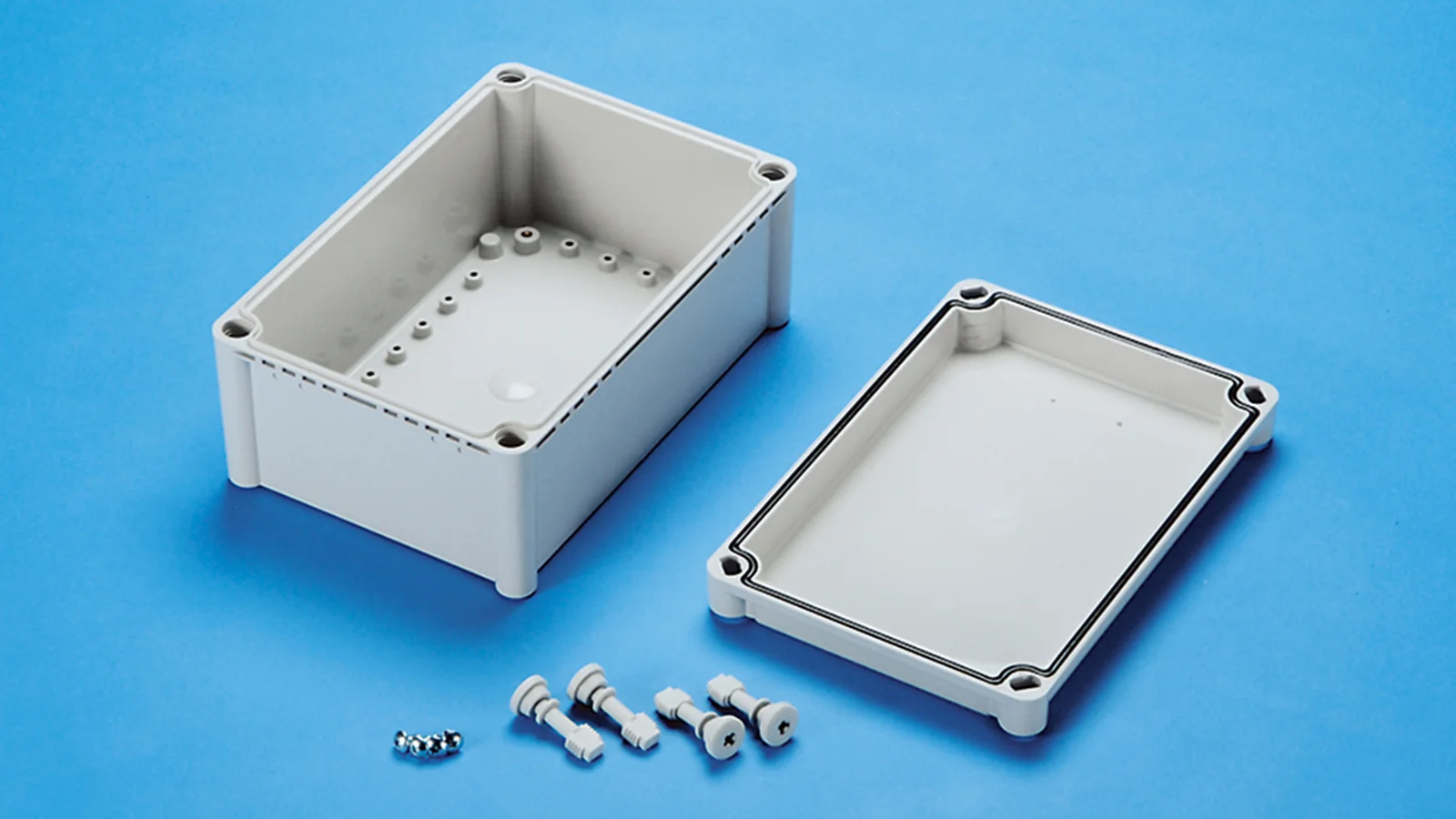
This can make the thermal path more challenging, particularly when a concentrated heat source is located away from the enclosure walls.
A plastic enclosure does not automatically require ventilation, though.
Depending on the thermal load and product requirements, engineers may consider incorporating a metal heat spreader, creating a conductive connection to a suitable external structure, or distributing heat across a larger internal area.
Thermal interface materials can also help manage gaps between components and heat-spreading structures.
For example, a compliant thermal gap pad can accommodate certain dimensional differences between a component assembly and a heat spreader.
The selection must consider more than thermal conductivity, though.
Material thickness, compression behavior, assembly tolerances, electrical insulation requirements, and long-term mechanical stability can all influence the final design.
An additional metal component also needs to be evaluated for manufacturing and assembly feasibility.
If a metal insert passes through the plastic enclosure wall, its connection and sealing arrangement must be considered as part of the environmental protection design.
If it remains entirely inside the housing, the designer must still establish how the collected heat reaches the outside environment.
The best choice depends on the complete product architecture, not the enclosure material alone.
Can an Internal Fan Help If the Enclosure Has No Vents?
An internal fan does not require an opening to the outside.
It can circulate the air already inside the enclosure, potentially reducing temperature differences between internal regions.
Moving internal air is different from removing heat from the entire system, though.
An internal fan can help transfer heat toward cooler enclosure walls or an internal heat exchanger. The heat must still cross the enclosure boundary before it can be released to the environment.
The 2026 hybrid air-thermosiphon study published in Discover Mechanical Engineering provides a practical example.
Its system used internal airflow circulation to reduce localized hot spots, while thermosiphons provided an additional mechanism for transferring heat toward the external environment.
The researchers combined experimental measurements with CFD analysis, obtaining substantially lower equipment temperatures in their studied industrial panel.
For compact electronic products, a simpler passive approach may be sufficient.
For larger industrial cabinets or systems with greater heat loads, closed-loop heat exchangers, thermosiphons, or other engineered thermal management systems may be more appropriate.
The cooling method should follow the actual thermal requirements rather than assuming that every sealed enclosure needs either a fan or an elaborate cooling system.
How Should Sealed Enclosure Thermal Performance Be Verified?
A thermal design can appear satisfactory in CAD while behaving differently once assembled.
Actual performance depends on component power losses, manufacturing tolerances, assembly contact conditions, mounting position, ambient temperature, and product operating cycles.
The enclosure's installation environment can also influence the result.
For example, mounting a housing against a wall may reduce the external area exposed to free airflow.
A product designed for shaded indoor operation may experience significantly higher temperatures when installed outdoors under direct sunlight.
Siemens discusses these considerations in its engineering guide, A Complete Guide to Enclosure Thermal Design — 14 Key Considerations.
The guide covers passive cooling, enclosure geometry, airflow, transient behavior, and the use of CFD simulations to evaluate design choices.
For physical validation, relevant measurements may include component temperatures, internal air temperature, external surface temperature, and ambient conditions during operation.
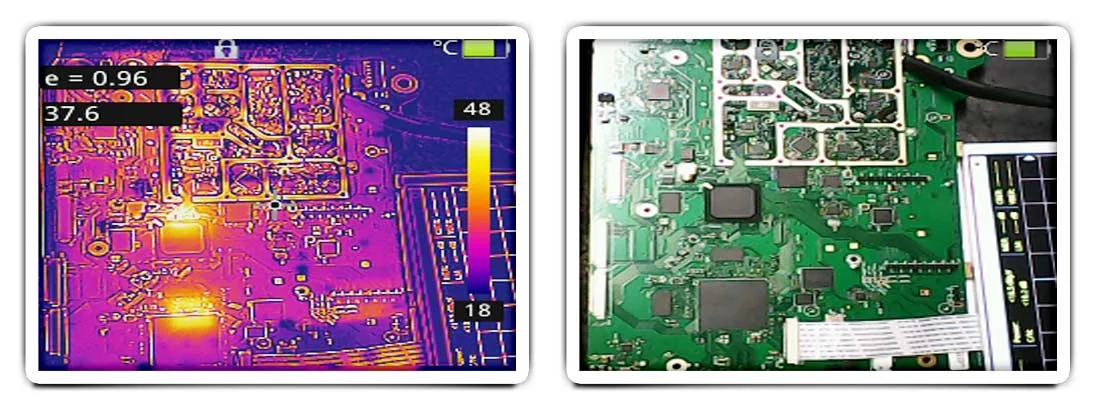
Testing should represent the intended application, including unfavorable conditions where appropriate.
The specified environmental protection also needs separate confirmation.
IEC 60529, Degrees of Protection Provided by Enclosures, defines classifications related to protection against access, solid foreign objects, and water.
An IP rating does not, by itself, establish that the electronics inside an enclosure will remain within their allowable operating temperatures.
Likewise, adding a heatsink or changing the enclosure geometry does not automatically prove that the finished assembly maintains its originally intended protection rating.
Thermal performance and environmental protection must both be considered in the final product design and validation process.
What Should OEMs Consider Before Finalizing a Sealed Enclosure?
There is no single cooling method suitable for every sealed electronic product.
A low-power sensor may operate reliably with a carefully designed plastic enclosure and no additional cooling hardware.
A higher-power industrial controller may need a conductive thermal path to a metal housing.
A large sealed electrical cabinet may require internal circulation, an external heat exchanger, or a more specialized thermal management arrangement.
Before finalizing an enclosure, the development team should establish the expected heat generation, permissible component temperatures, installation environment, target protection level, material requirements, and available space for thermal management.
The chosen manufacturing process also matters.
A die-cast aluminum enclosure may incorporate external fins and internal mounting structures, while an injection-molded plastic housing may require a different arrangement of metal inserts, thermal interfaces, and assembly features.
The final design should account for how these elements will be manufactured, assembled, and evaluated.
Removing ventilation holes is not the objective by itself. The objective is a reliable heat-transfer path that meets both the product's thermal requirements and its environmental protection needs.
Tongyong Industries supports custom electronics enclosure development through review of component layouts, material selection, thermal requirements, manufacturing constraints, and prototype considerations. OEM teams can provide available 3D models, PCB layouts, expected power dissipation, installation conditions, and environmental requirements for an initial design review. This helps identify possible enclosure structures and manufacturing approaches before the product moves toward tooling and production.